Buildings
Large buildings where the crowd changes through the day.
In shopping centres and malls, airports, convention centres and large offices, the difference between 50 and 500 people is where energy can be saved. Here is how each one is used, and what Brightspace does in it.
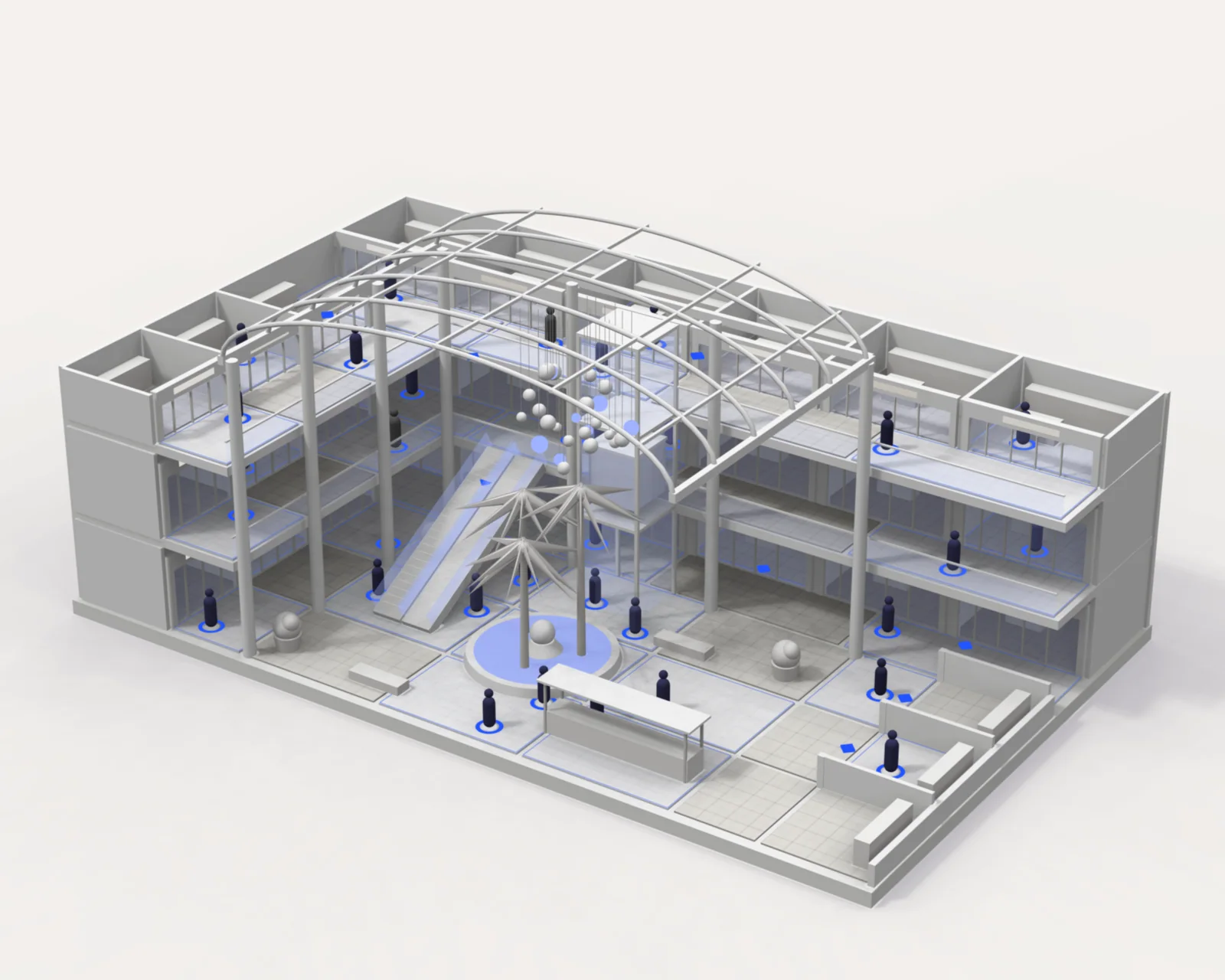
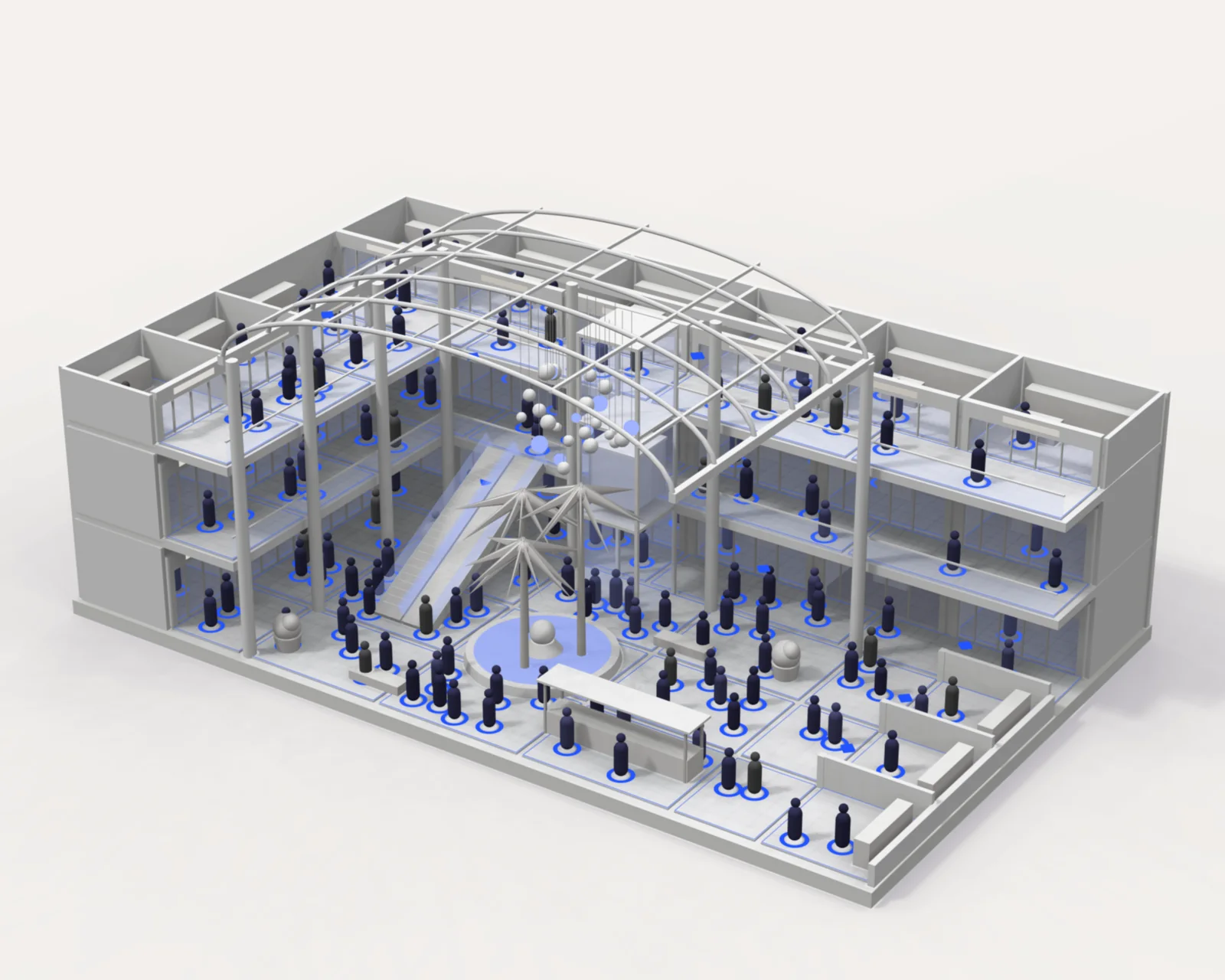
01 · Shopping centres and malls
Cooling that follows the footfall.
Footfall moves through a mall zone by zone. Concourses, atriums and food courts fill and empty through the day, while the HVAC runs on fixed schedules and abstract metrics. Air conditioning is typically 40 to 60% of a large building's electricity use.
What Brightspace does
We track every occupant in every zone, anonymously and on the device. The live digital twin plans cooling and airflow for each zone and writes it back through the existing Building Management System (BMS), so a busy food court gets what it needs and a quiet wing is no longer conditioned for a crowd that is not there.
On site
Ceiling and wall sensors on their own wireless mesh, with no building Wi-Fi and no IT integration. Installed while the centre trades, with minimal capital works and no extended shutdowns.
What the operator also gets
- FootfallHow many people are in each part of the centre, second by second.
- DwellHow long visitors stay in each part of the centre.
- LeasingDetailed traffic data for leasing and tenancy conversations.
- CleaningClean the zones that were used.
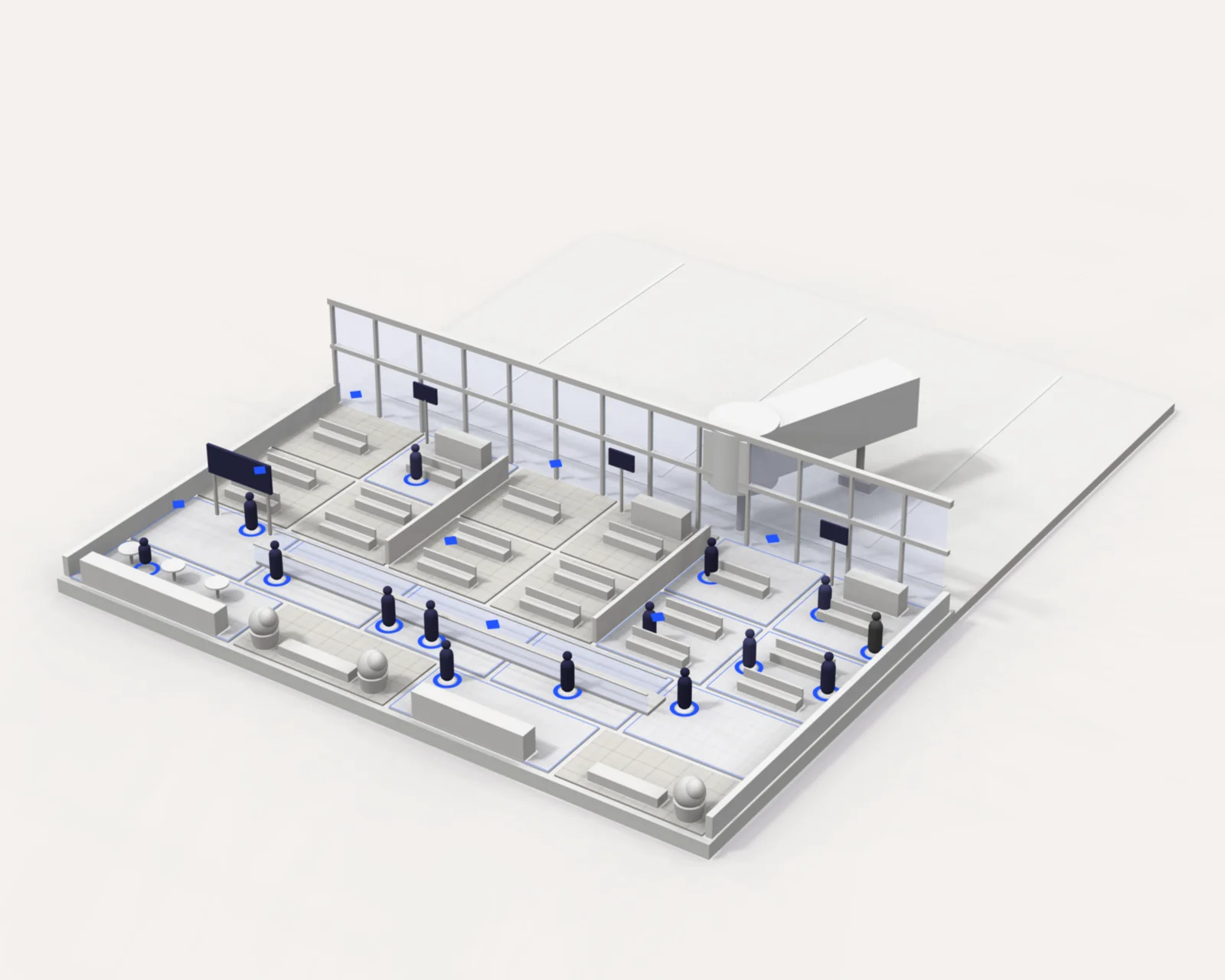
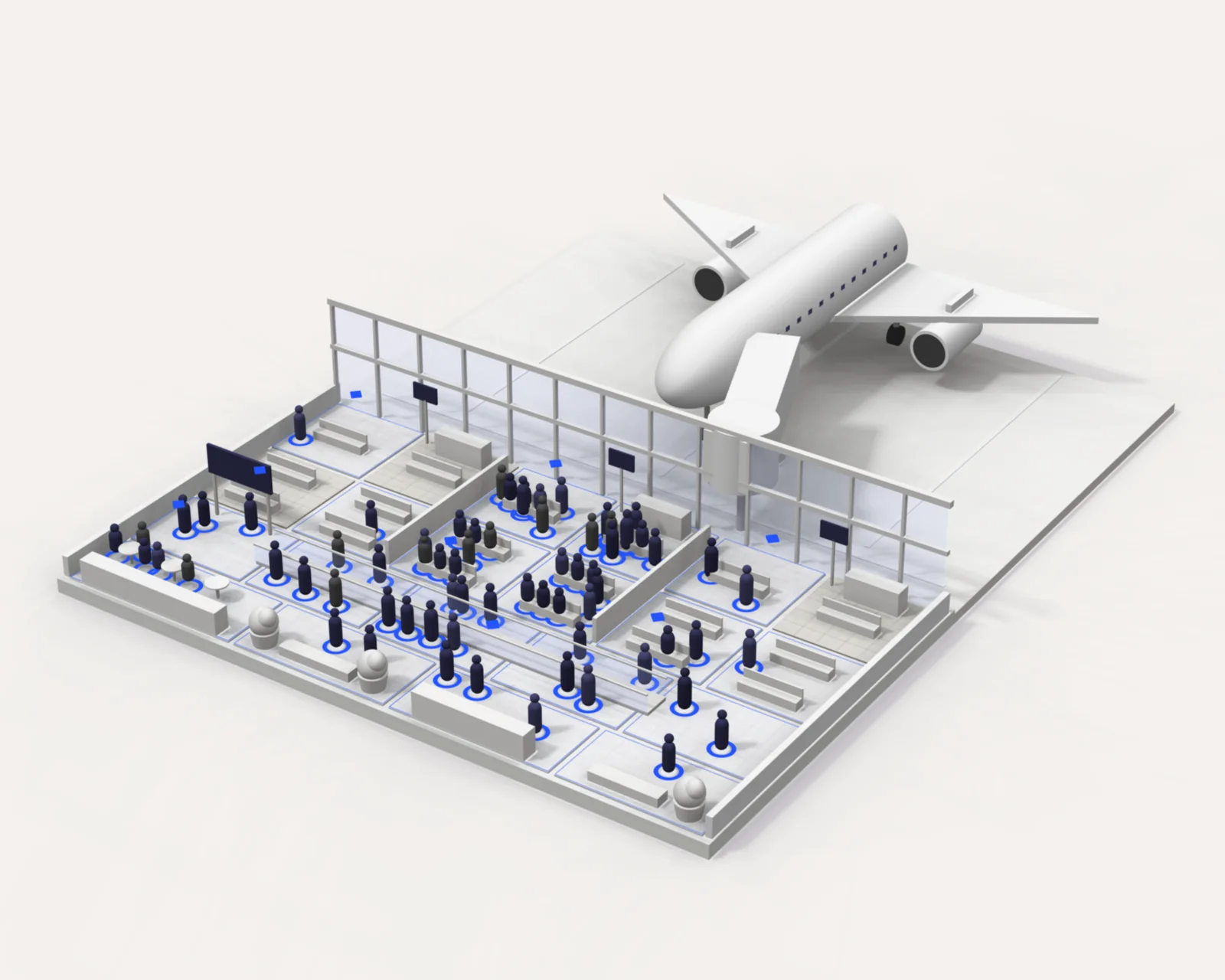
02 · Airports
Gates fill and empty with the flights.
Terminal zones fill in the hour before a departure and around an arrival, then sit mostly empty. Most terminals still run the HVAC on a fixed schedule for every possible flight, from the first departure to the last.
What Brightspace does
Occupant tracking follows the people through check-in, gates and arrivals. Every minute, the live digital twin works out what each zone needs and sets it through the existing BMS. When the last person leaves a zone, the plant serving it winds down.
On site
All processing happens on the sensor. No video is stored and no identity is captured. The sensors run on their own network, separate from airport systems, and are designed to satisfy IT security and privacy review.
What the operator also gets
- Passenger flowWhere people are in the terminal, second by second.
- DwellHow long passengers stay in each area.
- CleaningClean the zones that were used, between flights.
- Air qualityCO₂, temperature and humidity through every peak.
03 · Convention centres
A hall can be empty at 7 am and full at 10 am.
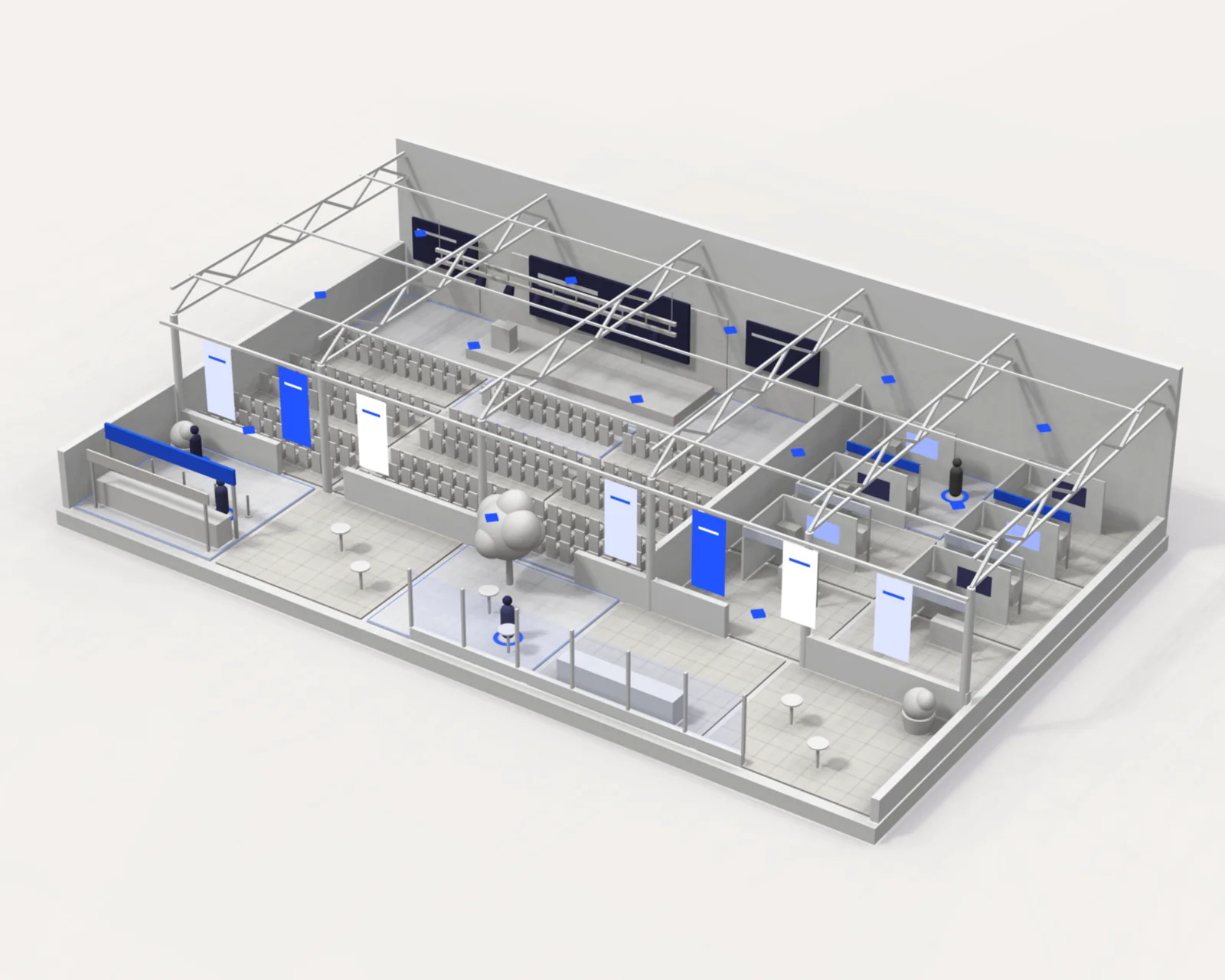
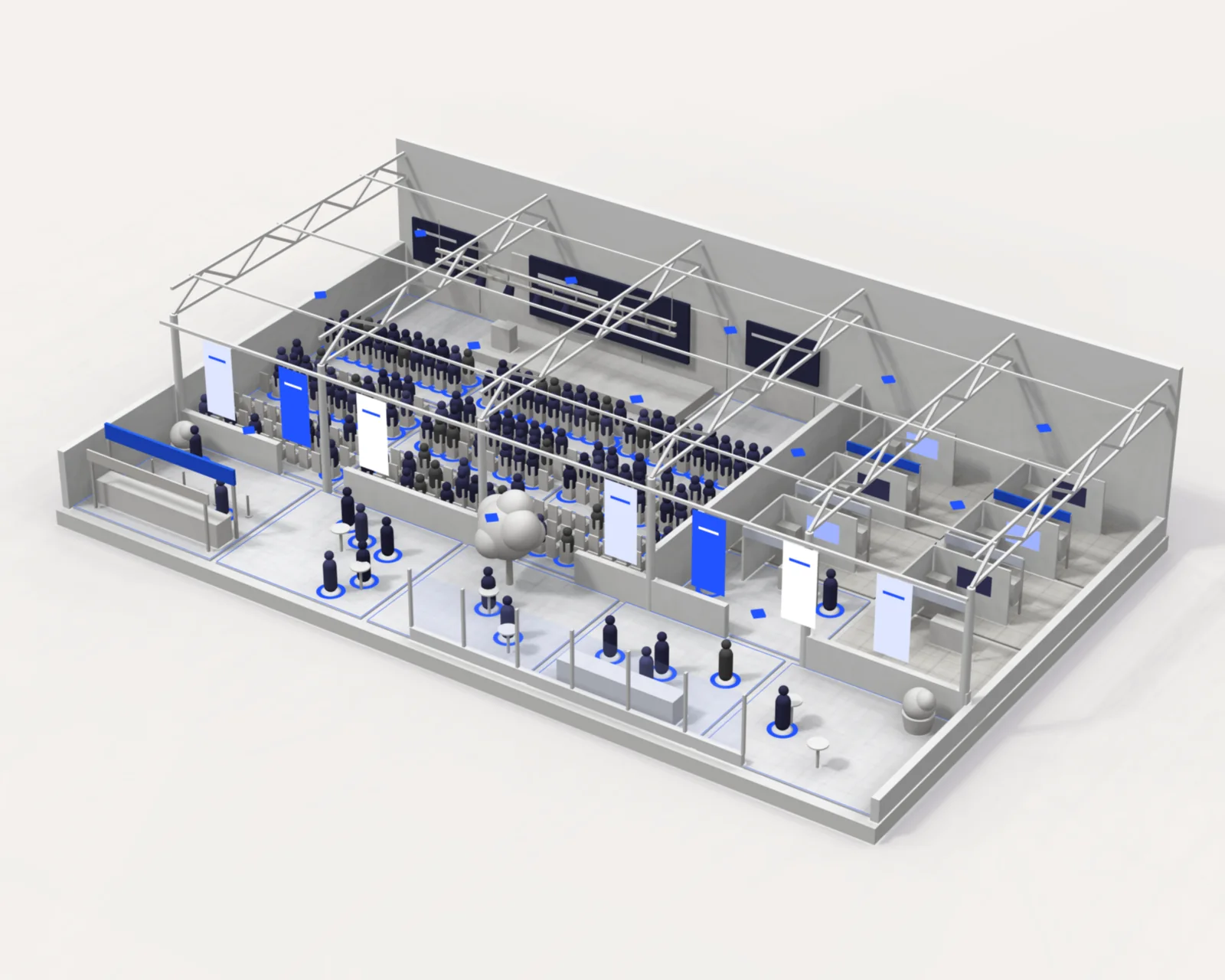
Halls, foyers and meeting rooms swing between empty and full several times a day. They are usually conditioned for the number booked. A room booked for 400 people might have 150 in it.
What Brightspace does
We track every occupant across halls, foyers and concourses, and adjust fans, cooling and fresh air zone by zone as the crowd arrives, moves and leaves. Control runs through the BMS that already runs the precinct.
On site
Installed while the venue operates, with no major equipment replaced. We work alongside the venue's mechanical services contractor, as we did with AE Smith at International Convention Centre Sydney (ICC Sydney).
What the operator also gets
- AttendanceReal numbers in each hall, for the events and operations teams.
- Crowd flowHow people move between halls, foyers and breakout rooms.
- Air quality through peaksCO₂ and temperature held as rooms fill.
- Space utilisationWhich rooms are used, and how full they get.
04 · Large offices
Office attendance changes every day.
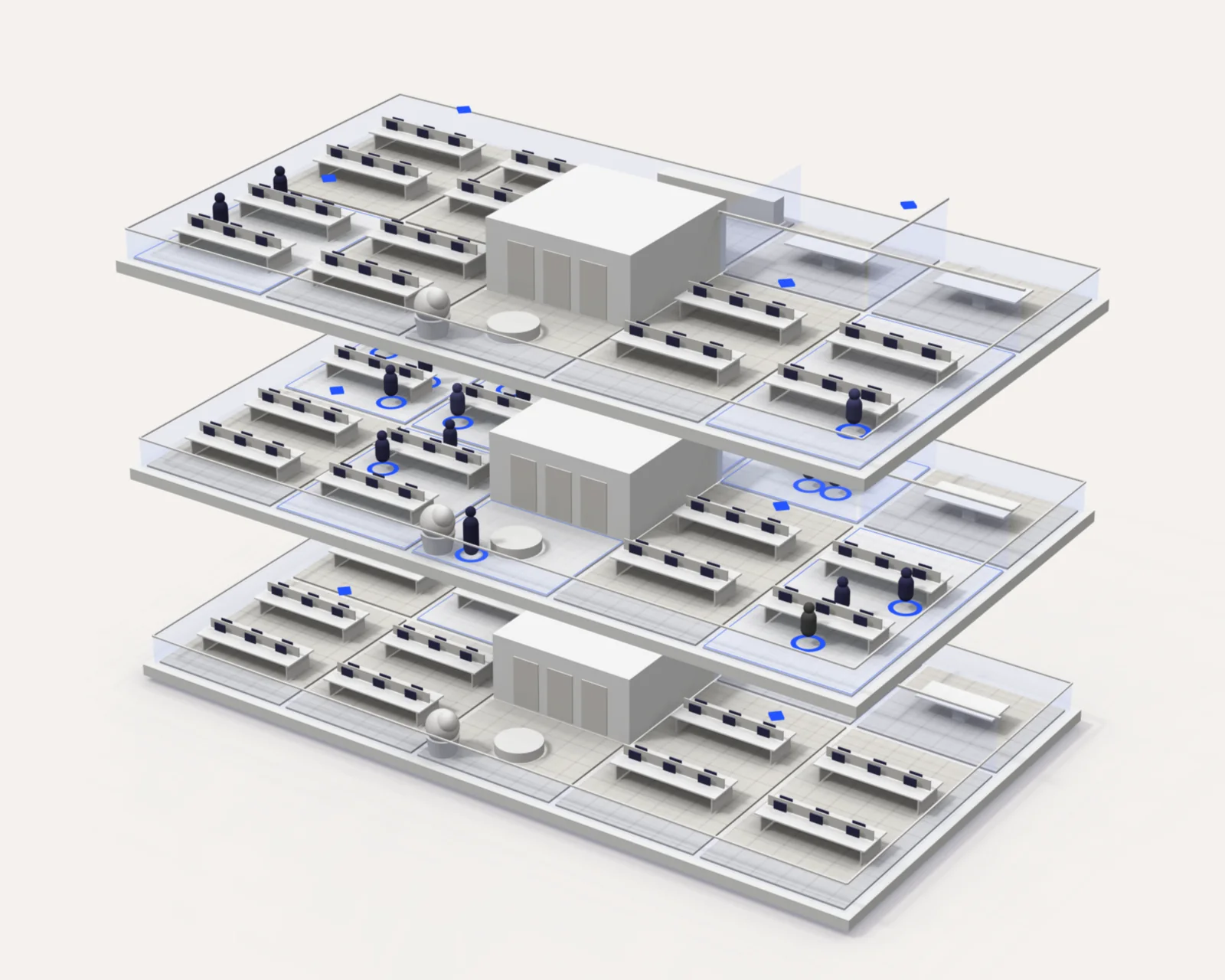
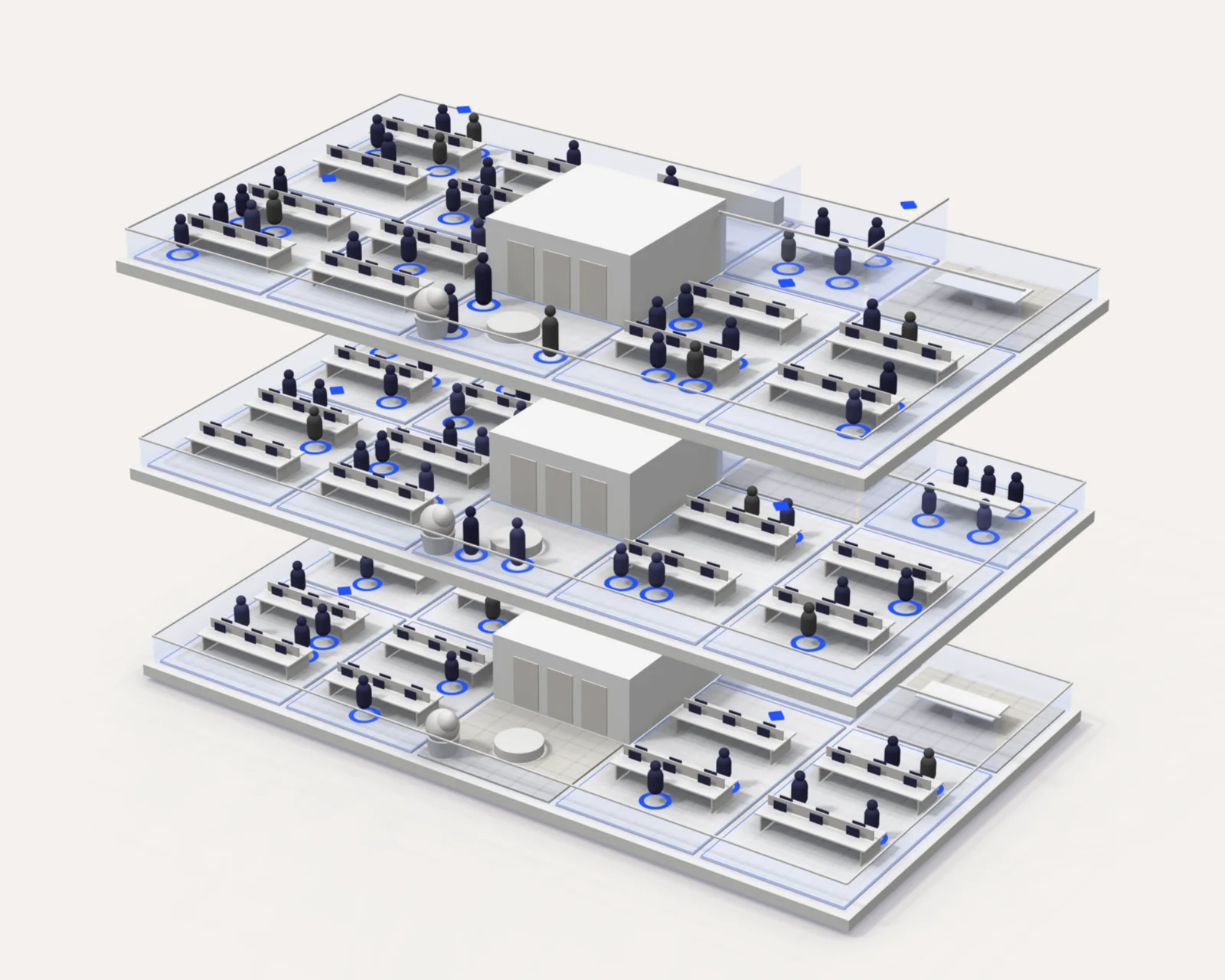
Office attendance changes by floor and by day, but most buildings condition every floor to the same schedule.
What Brightspace does
Each floor and zone gets the cooling and airflow its occupants need, and floors that nobody comes in to set back. The gateway connects to an existing BMS over BACnet, Modbus or REST API, or drives the plant directly where there is no BMS.
Building ratings
Supporting higher building ratings.
Measured energy reduction, continuous air quality monitoring and real-time occupant tracking data can support credits across energy efficiency, indoor environmental quality and smart building intelligence categories.
Get in touch
Find out what Brightspace could do for your building.
Start with a free savings assessment. We review your floor plans, plant and operating hours, and show you what you could save.